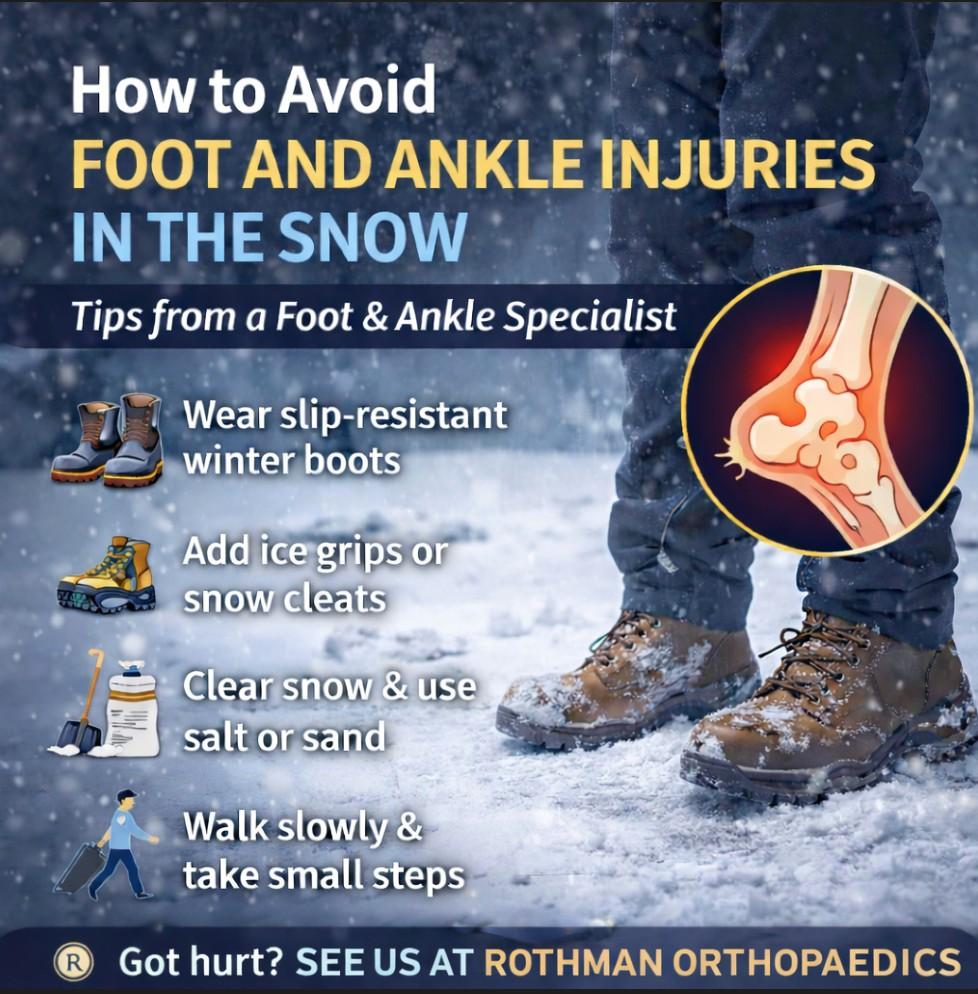
How to Avoid Foot and Ankle Injuries in the Snow: Tips from a Foot and Ankle Specialist
Winter can be beautiful, but it can also be dangerous for your feet and ankles. Snow and ice make sidewalks, driveways, and parking lots slippery. Every year, many people end up with ankle sprains, broken ankles, and foot injuries from simple slips and falls.
As a foot and ankle specialist, I see a big increase in injuries during the winter months. The good news? Many of these injuries can be prevented with a few smart steps.
Here’s how you can protect your feet and ankles and stay safe this winter.
Why Snow and Ice Cause Ankle Injuries
Snow often hides ice underneath. You may think the ground is safe, but one step can send you slipping. When you fall, your foot can twist or your ankle can bend the wrong way. This can lead to:
- Ankle sprains
- Ankle fractures (broken bones)
- Foot fractures
- Tendon injuries
Cold weather also makes your muscles tighter. Tight muscles don’t react as quickly, which can make it harder to catch yourself if you slip.
1. Wear the Right Winter Shoes
Your shoes are your first line of defense against slipping.
Look for:
- Non-slip soles with deep treads
- Ankle support to help keep your foot steady
- Waterproof material to keep your feet dry and warm
Avoid smooth-bottom shoes, dress shoes, or worn-out sneakers in snowy weather. If you walk outside often, consider adding ice grips or traction cleats to your boots for extra safety.
2. Walk Slowly and Take Small Steps
When it’s icy, how you walk matters just as much as what you wear.
Try this:
- Take short, slow steps
- Keep your feet flat on the ground
- Slightly bend your knees to help with balance
Pay close attention in areas where ice forms, like stairs, slopes, driveways, and curbs.
3. Keep Your Walkways Safe
You can prevent many injuries before they happen.
At home:
- Shovel snow early before it turns into ice
- Use salt or sand to reduce slipping
- Place mats or towels inside doors to catch wet shoes
These small steps can make a big difference for you and your family.
4. Warm Up Your Feet and Ankles
Cold muscles are more likely to get hurt. Before heading outside, take a minute to move your ankles and feet.
Simple warm-ups:
- Rotate your ankles in circles
- Point and flex your toes
- Do a few light calf stretches
Keeping your feet warm with thick socks also helps your muscles work better.
5. Know the Signs of a Broken Ankle or Foot
Sometimes, a fall causes more than just a small twist. You should see a foot and ankle doctor if you notice:
- Strong or lasting pain
- Swelling that doesn’t go down
- Bruising
- Trouble standing or walking
- A foot or ankle that looks crooked
These can be signs of an ankle fracture or foot fracture. Getting treatment early helps bones heal the right way and can prevent long-term problems.
When to See a Foot and Ankle Specialist
If you slip on ice and your ankle or foot hurts, don’t ignore it. Many people try to “walk it off,” but that can make injuries worse.
A foot and ankle specialist can:
- Take X-rays or scans
- Check for fractures or torn ligaments
- Create a treatment plan to help you heal faster and safer
Stay Safe and Enjoy Winter
Winter should be a time for fun, not injuries. By wearing the right shoes, walking carefully, and paying attention to pain, you can lower your risk of ankle and foot injuries.
If you do get hurt, seeing a foot and ankle expert can help you get back on your feet and back to your life as quickly as possible.